Lockouts · Wahnekewaning Beach
Seized & Jammed Lock Opening in Wahnekewaning Beach
You are inside, the deadbolt is thrown, and the thumb-turn will not budge. It moved a little last week with some effort.
Seized & Jammed Lock Opening
In plain words
This service has a season here. The first wet fortnight of winter sends meltwater into keyways that freezes overnight, and doors on the north and shaded sides of a building stay iced the longest. Salt spray from driveways and walkways leaves a crust that thickens with every thaw. Then summer humidity swells wood doors until the bolt drags in its pocket. A jammed lock opening in these conditions means thawing without boiling water, flushing out salt, drying the cylinder, and dressing it with a lubricant that sheds moisture, along with a check of the door so the same weather does not jam it again next month.
How the visit goesThe lock works, but only if you lean on the door with your hip while turning the key. After a week of humid weather the bolt is jammed against the strike plate, and without that push the key stops halfway.
Wahnekewaning Beach
How the visit goes
Levers, thumb-turns and mortise cases
Lever handles and mortise locks add parts that a plain deadbolt does not have, and each can jam on its own. A lever that drops without retracting the latch can have a tired return spring or a worn hub inside the case, though latch engagement, linkage, or the spindle can produce the same symptom. A thumb-turn that will not move can be a bent spindle, a stripped drive or a bolt pinned by the frame. On older houses and commercial doors the mortise case itself may be packed with decades of dust and dried grease. The locksmith works the lever, key and thumb-turn separately and feels where resistance starts, which locates the fault before the case is opened.
Freeing a seized cylinder without forcing it
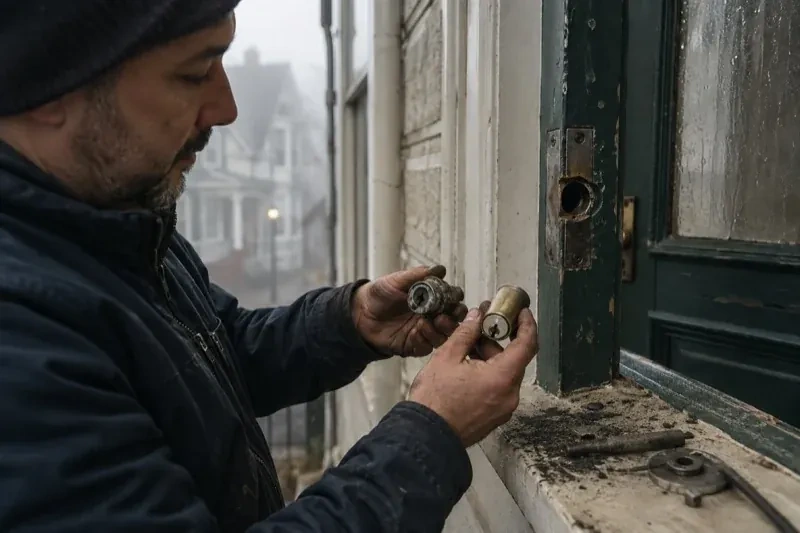
A plug that will not turn is coaxed, not wrenched. The locksmith flushes the keyway with an electronic contact cleaner to lift out grit and old residue, then applies a penetrating lubricant sparingly, since too much simply carries dirt deeper. The key is worked in small movements, in and out and a few degrees each way, letting the pins settle back into their stacks. If the cylinder cap has loosened, it is snugged so the plug sits square. As the plug begins to move, tension is kept light so nothing inside is bent. Once the door is open, the cylinder is removed for proper cleaning rather than left with lubricant masking the wear.
Keys that match the lock again
Where a worn or drifted key was part of the jam, you now hold a key cut from the code or from a fresh master, and every spare has been tried in the lock. Retire copies that needed force, and cut future spares from the good key rather than from each other, since each generation of copying adds error. Label the keys if several locks are involved. If the cylinder was replaced and pinned to your existing key, the whole house is still on one key. Keeping a written note of the keyway and, where it exists, the key code makes any future key a simple cut.
Seized & Jammed Lock Opening
In the van
- Cylinder springs, pins and cap
- Strike plate and hinge shims
- Lock de-icer
- Key blanks and code cutter
- Long hinge screws
What affects the quote
Same fees day, night or weekend
1Which part is jammed
A bolt pinned by the door, a cylinder clogged with grit and a broken tailpiece are three different jobs with three different amounts of work, and the quote follows the diagnosis rather than the symptom.
2Keying a new cylinder to your existing key
Pinning a replacement cylinder to the key already on your ring, or rekeying other doors to match a new key, is extra work per cylinder and simplest to do in the same visit.
3Matching finish and keyway
A replacement that has to match an unusual finish or a restricted keyway takes a specific part rather than a stock one, and the quote reflects the part.
Seized & Jammed Lock Opening: questions
My key is worn. Would a new copy have prevented this?
Possibly, if the key was part of the cause. A worn or bent key lifts the pins short of the shear line, so the plug binds even in a healthy cylinder, and a copy made from that key repeats the wear. A key cut from the code or from a crisp original is the fix. If the lock was also gritty or the door had moved, the new key would have eased things without settling them, which is why the locksmith checks all three.
Is a key stuck in the lock the same problem as a jammed lock?
They are close relatives. A key that will not come out is usually a plug that has not returned to its neutral position with the shell, a cylinder cap that has loosened, debris in the keyway, or a cylinder that is pinned incorrectly; some cylinders are also designed to hold the key until the plug is returned. The locksmith frees the key first, without pulling, then treats the cause the same way as any seized cylinder.
What should I tell you on the phone?
Say what the key does: refuses to turn, spins without effect, or works only when the door is pushed or pulled. Name the lock type if you can, whether it is a deadbolt, knob, lever or an old mortise lock, and which side of the building the door faces. Mention recent weather, any spray that went into the keyway, any other door you can use, and whether anyone is inside. That short list decides the tools that come.
Lockout Services
Seized & Jammed Lock Opening near you
The services offered in Wahnekewaning Beach answer the questions a door eventually asks. Who else has a key? Why does the bolt drag? Would a stronger cylinder be worth it? Can staff leave without a key? How do I open the safe my father left? Each answer is on the pages below.