Change or rekey · Ossossane Beach
Deadbolt Installation in Ossossane Beach
The front door has a handsome lever and a keyed knob, and that is all. Nothing above it.
Deadbolt Installation
In plain words
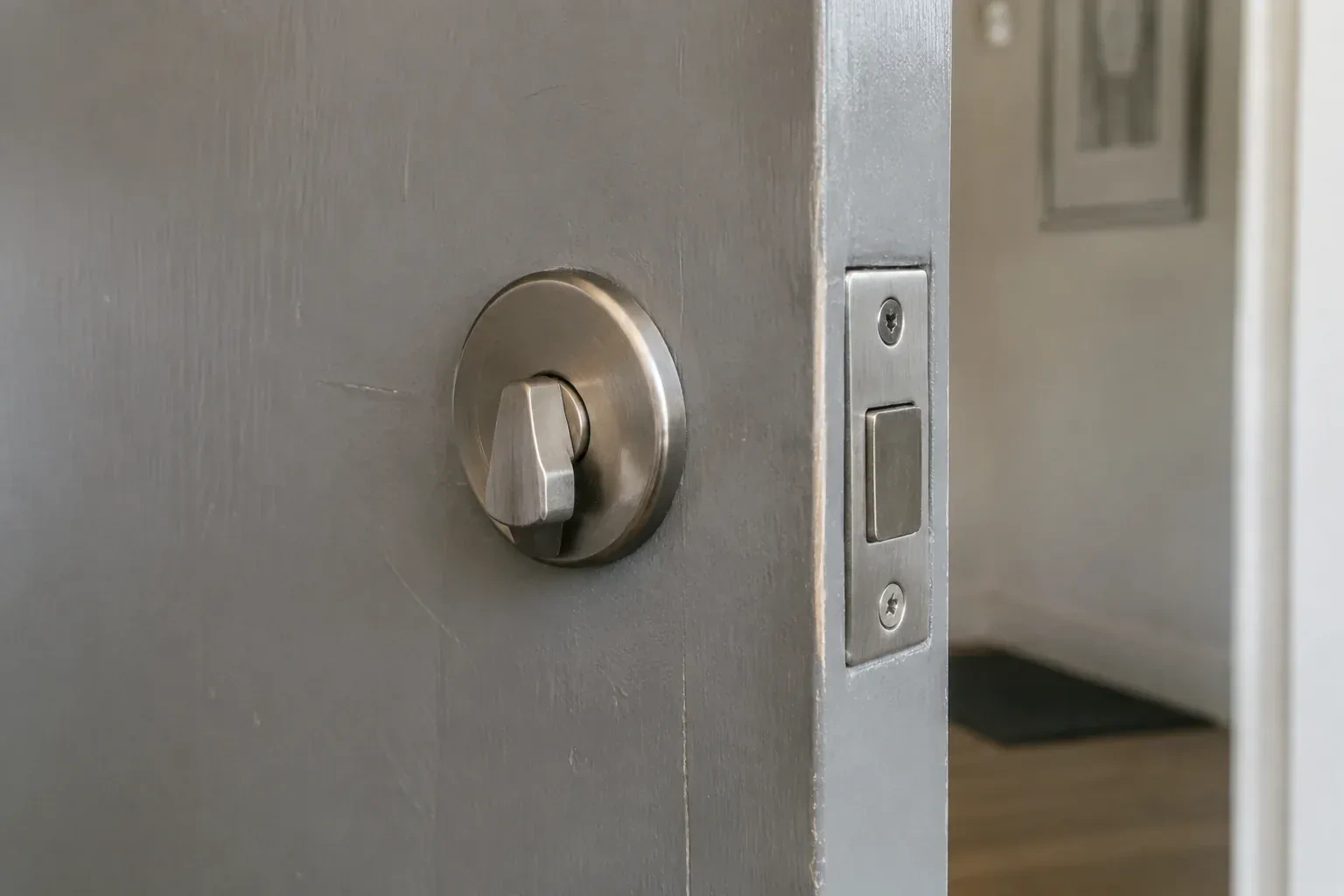
If your door already has a knob or lever bore and nothing above it, adding a deadbolt is a boring job in the literal sense. A jig clamps to the door at the right height, usually 140 to 150 mm above the knob centre, and guides a hole saw through the face and a smaller bit through the edge. The locksmith mortises the edge so the bolt faceplate sits flush, sets the bolt to the door's backset, then fits the cylinder outside and the thumb-turn inside. The frame is marked from the bolt itself, bored and chiselled for the strike, and the lock is tested open and closed.
How the visit goesThe front door has a handsome lever and a keyed knob, and that is all. Nothing above it. When the door is shut, the only thing keeping it closed is a spring latch the width of a thumbnail, and you have started to notice.
Ossossane Beach
How the visit goes
What the door is made of
The first thing the locksmith reads is the door itself, because it decides how the holes get cut. A solid wood slab in a century home bores cleanly but can split at the edge if the mortise is rushed. A steel-clad insulated door has a thin metal skin over foam, sometimes with a wood block at lock height, and needs a metal-cutting hole saw run slowly. Fibreglass behaves like a hard plastic and chips if the bit grabs. Thickness matters too: most exterior doors are 44 mm, some older ones 35 mm, and the deadbolt's screws and collar have to suit that. Ten seconds with a tape and a knuckle on the face answer all of this.
Setting a strike that reaches the framing
A reinforced strike or strike box is centred over the pocket, squared to the edge of the jamb, and its outline is scored and chiselled to a depth that leaves the plate flush. Pilot holes are drilled, and the two holes nearest the door stop take 75 mm screws that pass through the jamb and the shim space into the stud behind, with shorter screws in the remaining holes. The long screws are driven by hand for the last turns so the heads seat without crushing the jamb. Where the jamb is thin or has been split by an earlier attempt, a full-length jamb reinforcer is fitted under the strike instead.
The rest of the door, tidied
A deadbolt installation usually leaves the whole entry better than it found it. Hinge screws that were loose have been replaced with longer ones that bite into the framing, so the door hangs square. Weatherstrip that pinched the door has been trimmed and the latch below the new bolt has been checked against its own strike. The bore edges are clean, any shavings and steel filings have been vacuumed from the sill and the core, and the finish around the new hardware is unmarked. Open and close the door a few times over the next week and let the locksmith know if anything changes as the door settles.
Deadbolt Installation
In the van
- Jamb reinforcer
- 75 mm (3 in) strike screws
- Manufacturer's bore template
- Rekeying pins and key blanks
- Boring jig and 54 mm hole saw
What affects the quote
Same fees day, night or weekend
1Rental and building requirements
Matching a building's keyway, providing keys to a landlord or fitting a lock that a condominium corporation specifies can add hardware or bench work, each shown as its own item.
2Door material
Solid wood, steel-clad and fibreglass doors are each cut differently. Metal skins call for slower cutting and cleanup of filings, so the material is one of the first things a quote takes into account.
3Non-standard bore or backset
Older doors with a small cross bore, an unusual backset or a mortise lock case need adapting or filling before a modern deadbolt fits, and that preparation is quoted before work begins.
Deadbolt Installation: questions
Why does the strike plate matter so much?
The strike is the metal plate the bolt throws into, and it is where a kicked door usually fails: short screws bite only into the thin jamb board, which splits. A reinforced strike or strike box fastened with 75 mm screws passes through the jamb into the stud behind, so a blow is met by the framing of the house. On a wood frame, strike screws that reach at least 30 mm into solid wood behind the jamb are what actually holds.
Does a deadbolt work with a storm door or screen door?
It does, with one check: the thumb-turn and the outside cylinder have to clear the storm door when it closes. Most storm doors leave enough depth, but a low-profile deadbolt trim is chosen where the gap is tight. The storm door's own latch is separate and does not replace a bolt on the main door, since a screen frame gives little resistance on its own.
Can a keypad or smart deadbolt be fitted instead of a keyed one?
Yes, and the preparation is the same. Many electronic deadbolts use the standard 54 mm bore and the same edge bore, so a door cut for a mechanical bolt often accepts one, and a keyed bolt fitted today can usually be swapped for a keypad later, subject to that model's own bore, backset and thickness needs. The locksmith checks door thickness against the model, fits a reinforced strike as usual, sets up codes with you and shows where the backup cylinder or battery terminals are.
Change or Rekey Locks
- Lock Replacement & UpgradeThe brass handleset has gone blotchy and green where the winter salt reaches it, and the coating on…
- Vintage Mortise Lock ServiceThe old skeleton key still fits the keyhole, but it now needs a jiggle, a lean on the door and a…
- Smart Lock InstallationHalf the evenings someone asks whether the back door got locked, and nobody is sure.
Deadbolt Installation near you
A door in Ossossane Beach has more parts than most people think: the cylinder, the latch, the deadbolt, the strike, the closer, the hinges and the frame around them all. The services listed here touch every one of those parts, from a straightforward rekey to a full storefront hardware overhaul.
- Wasaga Beach
- Clearview
- Midland
- Penetanguishene
- Creemore
- Stayner
- Brocks Beach
- New Wasaga Beach
- Oakview Beach
- Oxbow Park
- Firth's Corners
- Portage Park
- Sunnyside
- Dunedin
- Glen Huron
- Singhampton
- Balm Beach
- Coutnac Beach
- Edmore Beach
- Georgian Heights
- Kettle's Beach
- Marygrove
- Perkinsfield
- Sawlog Bay
- Wahnekewaning Beach
- Woodland Beach