Lockouts · Sawlog Bay
Seized & Jammed Lock Opening in Sawlog Bay
You are inside, the deadbolt is thrown, and the thumb-turn will not budge. It moved a little last week with some effort.
Seized & Jammed Lock Opening
In plain words
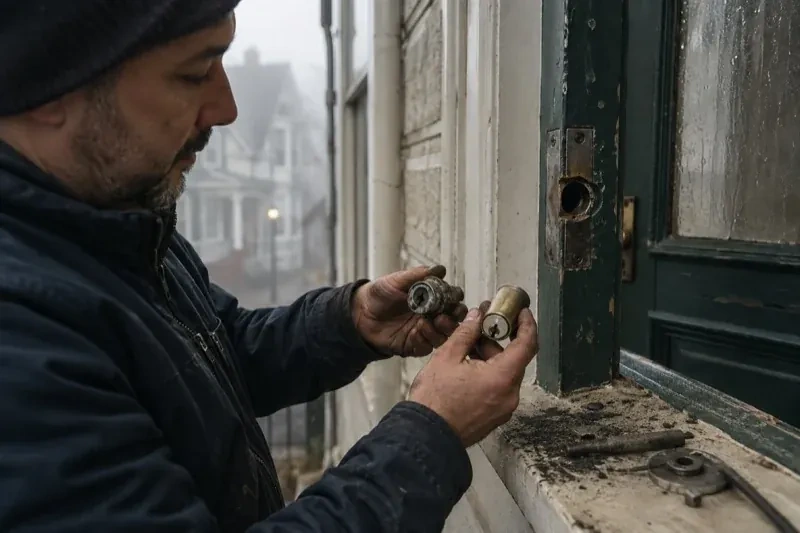
When the cylinder is the part that has seized, the work is about cleaning rather than force. Keyways collect dust, salt spray, metal filings and residue from sprays never meant for locks, and over time the pins stop lifting cleanly. The locksmith flushes the plug with a contact cleaner, applies a penetrating lubricant, and works the key in small movements until the plug turns. With the door open the cylinder comes out, is stripped and cleaned, gets fresh springs or pins where worn, and is dressed with the lubricant specified for that cylinder. A plug or shell that is worn, damaged or eaten through by corrosion is what gets replaced.
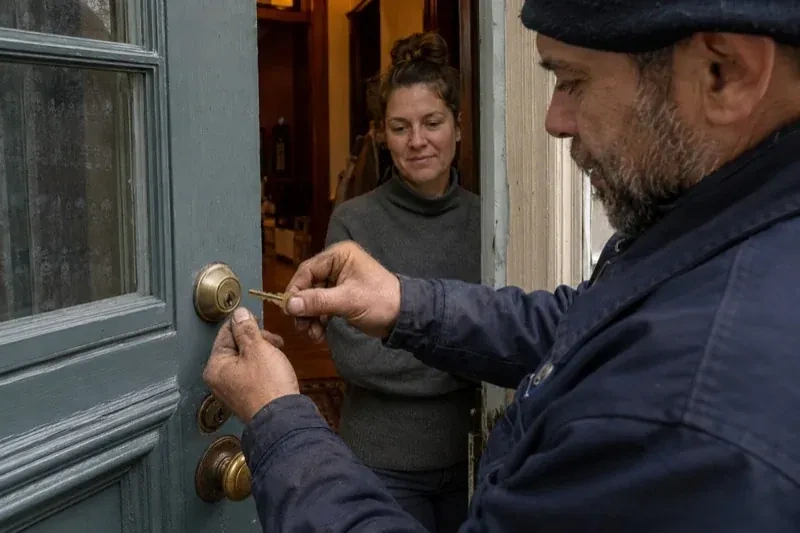
How the visit goesThe lock works, but only if you lean on the door with your hip while turning the key. After a week of humid weather the bolt is jammed against the strike plate, and without that push the key stops halfway.
Sawlog Bay
How the visit goes
Strike plate, bolt pocket and seal
The frame side gets as much attention as the door side. The locksmith looks at where the bolt meets the strike plate: scuff marks on the plate's edge, a bolt pocket shallower than the roughly twenty-five millimetres a deadbolt needs, paint or filler that has crept into the pocket, and weatherstripping thick enough to hold the door proud of the frame. A dab of chalk on the bolt end shows exactly where it lands. These findings explain a lock that works with the door open and jams when it is shut, and they point to a chisel, a screwdriver and a strike adjustment rather than to anything inside the cylinder.
Opening when the tailpiece has failed
A key that spins freely means the cylinder is fine and the bar behind it, the tailpiece or cam, has broken, slipped or twisted out of engagement. The bolt is then retracted directly through the mechanism rather than through the cylinder, or the cylinder is withdrawn so the locksmith can reach the bolt drive. Once the door is open the old tailpiece is removed and a replacement of the correct length and profile is fitted, since one that is too short repeats the fault and one that is too long binds. The cylinder goes back, the retaining screws are checked, and the bolt is thrown and retracted with the key until it moves cleanly through its full travel.
Set up for the freeze-thaw months
After a winter jam the cylinder has been dried and dressed with a lubricant that sheds moisture, and you know the routine for the next cold snap. A keyhole cover or a storm door keeps meltwater out of an exposed lock. A tube of de-icer in the car or coat pocket is the answer to a frosted cylinder, and boiling water is never the answer. Rinse salt spray off hardware near a treated driveway or walkway when the weather allows. Doors on the shaded side deserve a check after the first hard frost, because they hold ice long after the sunny side has cleared.
Seized & Jammed Lock Opening
In the van
- Cylinder springs, pins and cap
- Strike plate and hinge shims
- Lock de-icer
- Key blanks and code cutter
- Long hinge screws
What affects the quote
Same fees day, night or weekend
1Matching finish and keyway
A replacement that has to match an unusual finish or a restricted keyway takes a specific part rather than a stock one, and the quote reflects the part.
2Small parts behind the cylinder
Tailpieces, cams, springs, cylinder caps and pins are minor items, but each one used is named on the quote so you can see what went into the lock.
3When the call comes in
An evening, weekend or holiday call for a jammed lock costs the same amount as a weekday one. The locksmith looks at what is actually jammed once on site, and the exact figure follows from that, not from the clock.
Seized & Jammed Lock Opening: questions
My key is worn. Would a new copy have prevented this?
Possibly, if the key was part of the cause. A worn or bent key lifts the pins short of the shear line, so the plug binds even in a healthy cylinder, and a copy made from that key repeats the wear. A key cut from the code or from a crisp original is the fix. If the lock was also gritty or the door had moved, the new key would have eased things without settling them, which is why the locksmith checks all three.
Is a key stuck in the lock the same problem as a jammed lock?
They are close relatives. A key that will not come out is usually a plug that has not returned to its neutral position with the shell, a cylinder cap that has loosened, debris in the keyway, or a cylinder that is pinned incorrectly; some cylinders are also designed to hold the key until the plug is returned. The locksmith frees the key first, without pulling, then treats the cause the same way as any seized cylinder.
What should I tell you on the phone?
Say what the key does: refuses to turn, spins without effect, or works only when the door is pushed or pulled. Name the lock type if you can, whether it is a deadbolt, knob, lever or an old mortise lock, and which side of the building the door faces. Mention recent weather, any spray that went into the keyway, any other door you can use, and whether anyone is inside. That short list decides the tools that come.
Lockout Services
Seized & Jammed Lock Opening near you
These are the services we bring to doors across Sawlog Bay. Residential work covers lockouts, rekeying, lock replacement, deadbolts, smart locks and older hardware brought back to life. Commercial work covers storefront doors, exit devices, closers, master keys and safes. Vehicle key cutting rounds out the list when it is needed.
- Wasaga Beach
- Clearview
- Midland
- Penetanguishene
- Creemore
- Stayner
- Brocks Beach
- New Wasaga Beach
- Oakview Beach
- Oxbow Park
- Firth's Corners
- Portage Park
- Sunnyside
- Dunedin
- Glen Huron
- Singhampton
- Balm Beach
- Coutnac Beach
- Edmore Beach
- Georgian Heights
- Kettle's Beach
- Marygrove
- Ossossane Beach
- Perkinsfield
- Wahnekewaning Beach
- Woodland Beach