Commercial · Singhampton
Commercial Rekeying in Singhampton
A key turned up in the parking lot with the shop's name on its fob. It came back to you, which is lucky, but it means keys are leaving the building on rings you have never seen, and the shop's locks have not changed since opening day.
Commercial Rekeying
In plain words
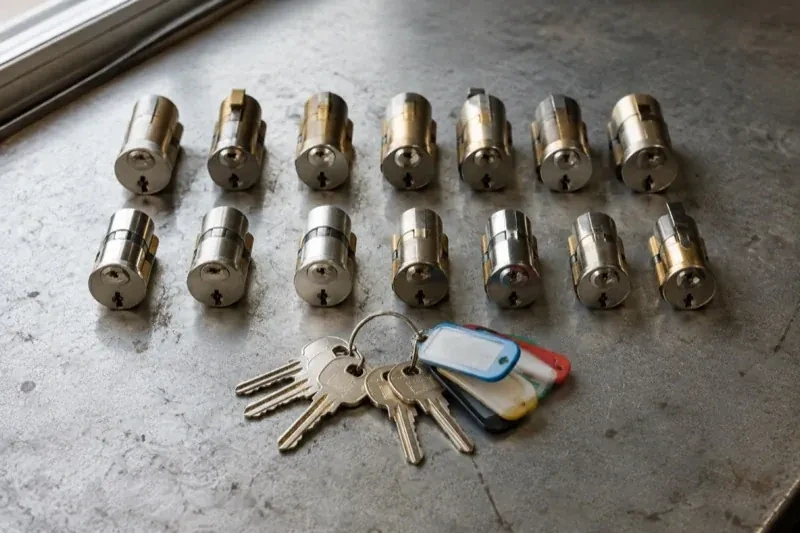
Changing the locks answers today's question; key control keeps it answered. During a commercial rekey the new keys are stamped with a serial code rather than the business name or address, so a dropped key tells its finder nothing. Each key is logged against the person who receives it, and the old keys are collected and cut up on the spot. For premises that want copies kept out of hardware stores, the cylinders can be set up on a restricted keyway, with blanks released only against a signed authorization. What you end up with is a set of locks whose keys you can account for years later.
How the visit goesTwo people left over the summer and the keys they handed back came up one short. Nobody is sure whether the missing key was for the front door, the stockroom or both, and the sign-out sheet stopped being filled in a year ago.
Singhampton
How the visit goes
Who needs to open what
The keying plan is a picture of how the business runs, so the assessment asks who goes through which door on a normal day. Front-line staff need the customer entrance and perhaps the stockroom; supervisors add the office; the owner and the bookkeeper hold the cash room; the IT contractor reaches the server closet and nothing else. Out of that conversation come the key groups: doors keyed alike so one key covers a role, doors keyed differently where separation matters, and whether a master for the owner earns its place. The plan also names anything left out on purpose, so the chart shows both what changes and what stays.
Door by door, never a gap
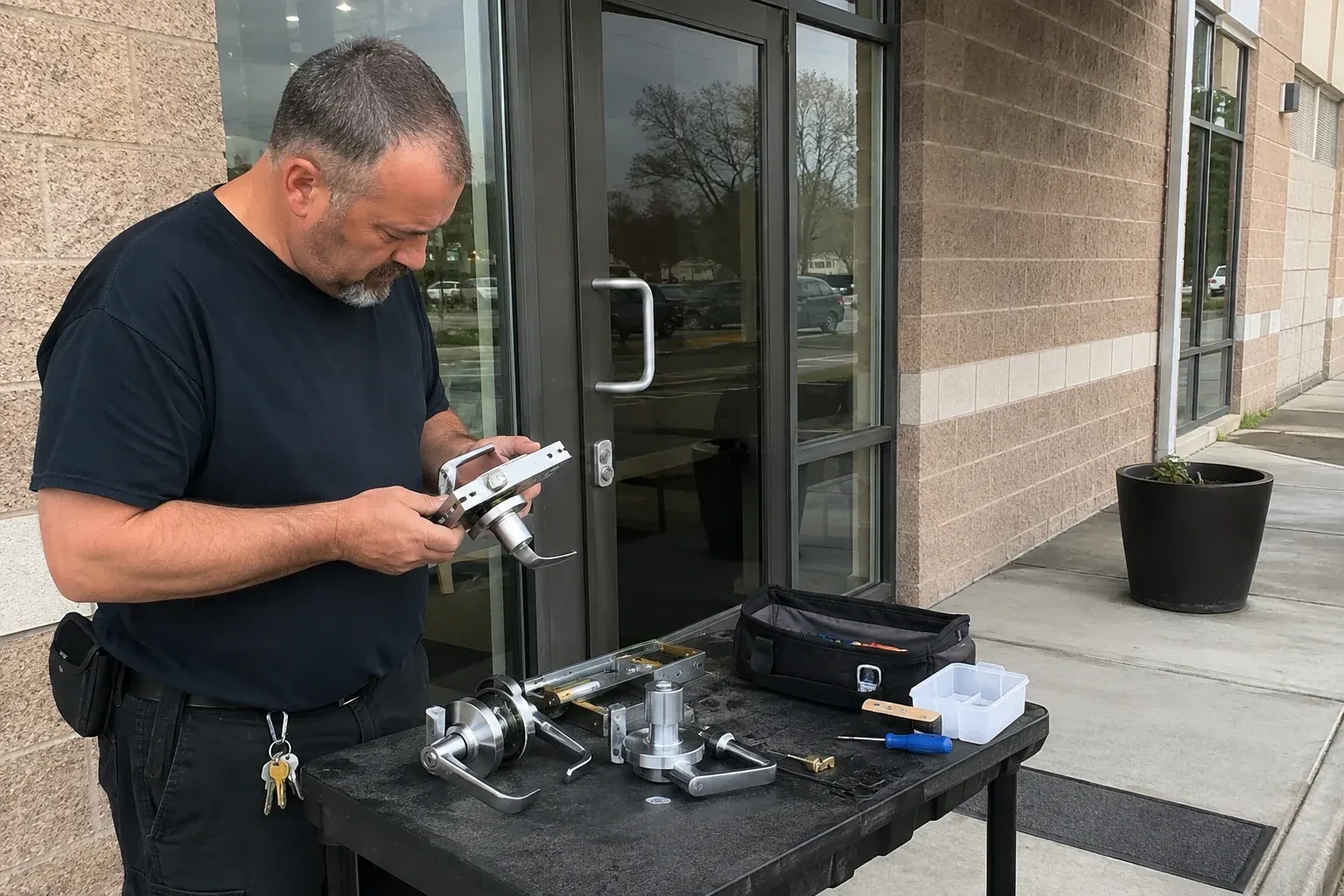
The sequence agreed at the assessment is followed on the day. The locksmith finishes one opening entirely before beginning the next: cylinder out, repinned, refitted, tested with both the new key and the old, and locked again. Only then does the next door come apart. The main entrance is usually left for last and done while someone from the business is present, so there is never a moment when the premises has a door that will not lock. Staff who are working during the visit are handed their new key before the door they use is changed, and a short note goes to anyone off shift about where to collect theirs.
Adding a door without starting over
The pinning records kept from the visit mean the system can grow. When the business takes the unit next door, adds a storage cage or replaces a worn lever set, the new cylinder is pinned into an unused combination on the existing chart and handed a key from the right group, and nobody already carrying a key notices anything changed. That is the value of leaving reserve combinations in a master system rather than using them all up on day one. Keep the locksmith's reference number for the system with the chart, mention it when you call, and a single new door becomes a short visit instead of a fresh plan.
Commercial Rekeying
In the van
- Mortise cylinder set screws and cams
- Standard and restricted key blanks
- Key gauge and decoder
- Master pins
- Cylinder removal and spanner tools
What affects the quote
Same fees day, night or weekend
1Upgrades chosen on the day
Some businesses use the visit to move to interchangeable cores, add a lockbox for the alarm company or fit a heavier cylinder on the cash room. Each is a separate line you can accept or leave.
2A master key plan
Pinning cylinders to accept both a change key and a master, and designing the chart so no key opens a door it should not, is more work per cylinder than keying everything alike.
3Cylinders that need replacing
Where a worn, corroded or low-grade cylinder is better replaced than repinned, the new part is added for that door alone, and the locksmith points it out before the work begins.
Commercial Rekeying: questions
We lost a master key. Does the whole building need doing?
Only the cylinders that master opened, which the keying chart identifies. If the lost key was the top master, that is every lock in the system; if it was a departmental master, it is that department's doors. Where no chart exists, the locksmith reads the cylinders first to establish what the key reached. The remaining doors, and any keys that never opened them, are left exactly as they are.
How often should a business change its keys as a matter of routine?
There is no fixed interval. Rekey on events rather than on a calendar: a key not returned, a lease change, a break-in, a renovation crew finished, or a key count that no longer matches the register. Businesses with a good register and a restricted keyway often go years between rekeys because nothing prompts one. A yearly check of the register against the keys on the hook is the habit that tells you when the time has come.
Will rekeying affect our alarm system or card readers?
Mechanical rekeying leaves electronics alone: alarm panels, card readers and keypads keep their codes and credentials. What changes is the list of people holding keys, and it is worth updating the alarm company's keyholder list and retiring the codes of anyone who has left at the same time, since keys and codes usually walk out together. Where a door has both a card reader and a keyed override, the override cylinder is rekeyed with the rest.
Commercial Locks
- Access Control InstallationYou just leased the empty unit next door and want the new tenant to open their own suite without a…
- Panic & Exit HardwareTwo doors used to swing as a pair at the community hall entrance, but one leaf has started closing…
- Commercial-Grade Lock ReplacementHead office wants every branch keyed alike under one system, and half the locations are still…
Commercial Rekeying near you
These are the services we bring to doors across Singhampton. Residential work covers lockouts, rekeying, lock replacement, deadbolts, smart locks and older hardware brought back to life. Commercial work covers storefront doors, exit devices, closers, master keys and safes. Vehicle key cutting rounds out the list when it is needed.
- Wasaga Beach
- Clearview
- Midland
- Penetanguishene
- Creemore
- Stayner
- Brocks Beach
- New Wasaga Beach
- Oakview Beach
- Oxbow Park
- Firth's Corners
- Portage Park
- Sunnyside
- Dunedin
- Glen Huron
- Balm Beach
- Coutnac Beach
- Edmore Beach
- Georgian Heights
- Kettle's Beach
- Marygrove
- Ossossane Beach
- Perkinsfield
- Sawlog Bay
- Wahnekewaning Beach
- Woodland Beach